
What do you see in this picture?
Some will just see four guys and a lady standing on the curb. Not a very compelling picture, either, with the faces of the lady and the guy in the blue jean jacket not even visible.
Others will recognize those four lads as the Beatles, but don’t realize the photo’s significance without the context of when it was taken.
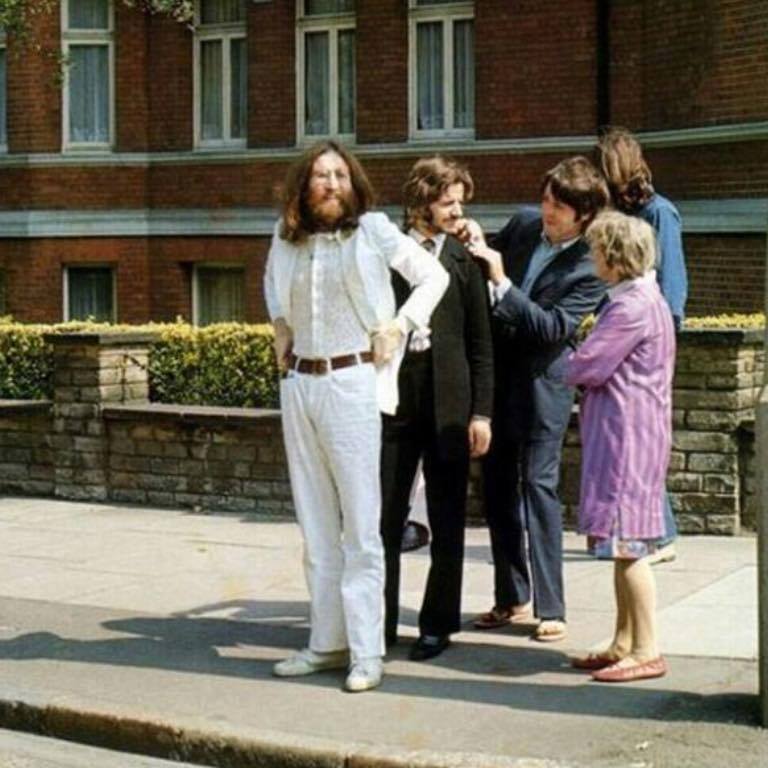
A few will see this picture for what it really is – a rare shot of The Beatles taken just moments before the photo that was to become one of the most famous album covers in history: Abbey Road, the last album the Beatles recorded.
When I visit a station I begin the strategic planning process with this idea…
For people to see things in the same way, it is helpful for them to be standing in the same place looking in the same direction at the same thing.
Some see successful programming principles clearly. Others find it difficult to recognize what they’ve not experienced.
It’s been said that we only value what we love. We only love what we understand. We only understand what we are taught.
Having spent 25 years serving in Christian radio I have discovered a few distinct backgrounds that form the perspective of how and whether certain programming principles are understood and valued.
Those with a ministry or church background can tend to perceive programming principles through a filter of church work. Often, the spoken word, gathering people together, and tangible activities that impact the community resonate most with them. They can tend to undervalue the power of music to connect emotionally and cut through denominational and theological barriers. Music can be viewed as “filler” between the REAL ministry.
Those with a sales or technical background tend to view programming as a linear process: a list of tasks. If you do A then B will happen. Some with a sales or technical background are uncomfortable that programming principles can’t fit nicely into a spread sheet. They can tend to undervalue the ART of programming – the power of emotion, how the station makes people feel, or the art of storytelling. Linear thought often dictates that if we paint by the numbers we’ll end up with the Mona Lisa.
None of these perspectives is necessarily wrong, in and of itself, just incomplete and one dimensional. It’s like looking at the picture of the Beatles and not understanding the context of what makes it significant.
Art and science. Laughter and tears. Technical efficiency. Relevant and meaningful ministry initiatives. Impacting lives and telling those stories.
Each is important in the success of your programming, but without understanding the big picture our default is inevitably what we understand rather than what is most effective.
It’s helpful to understand how your own background colors your perspective of what’s important. As my friend Joe Battaglia says,
“You always go back to the trough from which you’ve been fed.”
Or, to paraphrase the Fab Four, how we get back to where we once belonged.