





















Tommy Kramer Tip #105 – One Thing Per SHOW

In coaching Talent to become more than just deejays, I draw on why legendary personalities become legends. In the past, it was Robert W. Morgan in L. A. or Fred Winston in Chicago. In Dallas, where I lived most of my adult life, it was Ron Chapman, Terry Dorsey, Kidd Kraddick, and in the Contemporary Christian arena, Brother Jon Rivers. There are others, too, of course. (Fill in the name of your market’s Legend.) In my hometown of Shreveport, Louisiana, it’s a guy named Larry Ryan, who’s been in that market for over 40 years. And when I was just a duckling starting out in radio, Larry told me something that I still remember every day, and have developed specific techniques in how to coach.

He said, “If you do just ONE THING each day that people remember, you’ll be a star.”

ONE THING PER SHOW. That’s all you need. Do the math: Say you take two weeks of vacation per year. So if you work five days a week, fifty weeks a year, and do one thing each day that your Listener really connects with, that’s 250 things at the end of a year that your Listener remembers about you that he or she doesn’t remember about your competitor! 250 concrete reasons to keep listening to you, instead of to the other options across the radio landscape or satellite and digital formats.

Now this is not about only doing one thing during your entire show. It’s about doing one thing that’s memorable, one thing that no one else will do, every show. It’s also about never going through a show without that one thing. This is one of the prime areas where “critique” serves no real purpose. It’s all about coaching—brainstorming ideas to cultivate a sense of what will set you apart.

– – – – – – –
Tommy Kramer
Talent Coach
214-632-3090 (iPhone)
e-mail: coachtommykramer@gmail.com
Member, Texas Radio Hall of Fame
© 2015 by Tommy Kramer. All rights reserved.

Looking For A Campground

“The most significant changes to our world are going on as we speak and will continue as millennials become our future leaders.” – Forbes Magazine

image

The Millenials are coming!  The Millenials are coming!

The loud voices of nervous Paul Revere like baby boomers can be heard throughout the media landscape.  Unfortunately Pew research says they’re already here.  2015 is the year Millennials will surpass Boomers as the largest living generation.

Obviously this is going to have an earth shaking impact on media.  Which has divided radio people into camps. The first thinks Millennials will become like their parents at a given age, so there’s no problem at all. Radio will continue just as strong as always.

The second group thinks it’s helpless, and radio is dead. It’s inevitable.

There is a third, smaller, quieter camp that follows the future so they can understand how to integrate radio with the media palate of the future. Those are the people to listen to. They know the coming wave can’t be ignored.

image

.


Frost Advisory #259 – The Top 10 Reasons Stations Aren’t Successful – #2

Over the last several weeks I’ve attempted to bring out in the open the top ten reasons Christian music stations aren’t successful. While there are certainly a number of ways to measure success having lots of people listening certainly is a step in the right direction.

(Drum roll) It’s time for the #2 reason stations aren’t successful…

The very people who would enjoy your station don’t know you’re there.

In his book “Linchpin” Seth Godin tells of an author who has passion is for his craft, but no real passion for spreading his ideas. “And if his ideas don’t spread, no gift is received. When an artist stops work before his art is received, his work is unfulfilled.” It’s that if-a-tree-falls-in-the-forest thing.

The way I see it Christian music radio is the only faith-based art form that is still in the public square. In Michelangelo’s day all art was Christian. Not so now. Christian TV is laughable. Christian bookstores and movies are still a niche, although it’s encouraging to see the recent success of faith-based films. But there are a handful of Christian music stations with larger audiences than the AC, country, or rock stations in their market. That was once unheard of. Consider the implications if we really had a passion for letting people know that we were on the air!

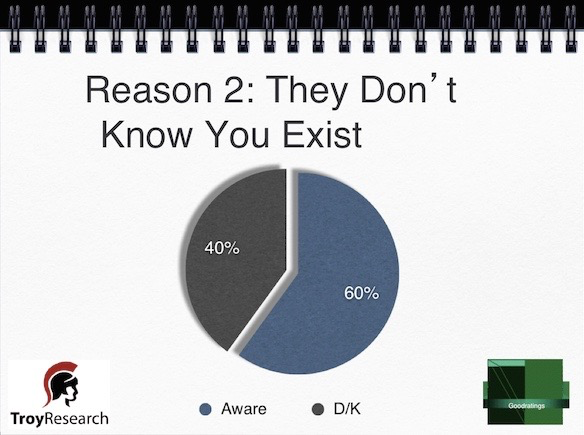
In the landmark research study “Why Christians Don’t Listen to Christian Radio?”, 40% of those who said they liked the music indicated they didn’t know of a station that played it.

why-christians

My friend Alan (not his real name) tells me about one company that considers $1 spent on growth more important than $1 spend on maintaining. Spending that $1 on growth is non-negotiable to them, rather than the first thing that gets sliced from the budget, a practice common at most stations.

When Jesus commanded to go make disciples of all nations, I don’t recall him adding “if it’s in the budget.”

Tommy Kramer Tip #104 – Hearing/Listening

I‘ve heard jocks complain that they didn’t get any calls or emails or Facebook posts when it was expected. This seems odd to me, like a playwright complaining that the audience in the theater didn’t get a joke.

It’s easy to just say “they heard, but they didn’t listen,” but that’s
the wrong end of the binoculars, because it’s about your agenda. We should be considering the possibility that “they were listening, but they didn’t hear,” because that puts the responsibility where it really belongs—on us. If the message isn’t getting across, then we need to do a better job of getting it across.

Besides the fact that people are busy and have lives, I think there’s always a reason why someone doesn’t really hear something. Assuming out front that what you’re talking about is on target, then you have to consider that (1) maybe it’s just not clear, or (2) that the way you did it just wasn’t as compelling as it could have been.

When you put maximum effort into the precise wording and emotional investment you’ll need to make someone actually pay attention, you’ll be far more likely to get the results you want. (Vocabulary is crucial.)
If you don’t really want to dive into it that deeply, you can still be pretty good—but you can’t be great.

Treat every time you open the mike like your career depends on it, because it actually kinda does.

– – – – – – –
Tommy Kramer
Talent Coach
214-632-3090 (iPhone)
e-mail: coachtommykramer@gmail.com
Member, Texas Radio Hall of Fame
© 2015 by Tommy Kramer. All rights reserved.
Is Your Station Talkable?

“Mass advertising can help build brands, but authenticity is what makes them last. If people believe they share values with a company, they will stay loyal to the brand.” – Howard Schultz


John Moore, one of the authors of The Passion Conversation, shared some interesting thoughts about what he calls “Talkable Brands.”  Those are the brands with so much passion in their fans that they talk about them…a lot.

Here are three things he suggests every talkable brand has:

Talkable brands are Original
The more obvious you are, the more talkable you become. Being obvious is about expressing a company’s unique personality, not just for one day, but every day a business is in business.

Talkable brands are Informational
For word of mouth to happen, someone needs to gain some knowledge from either personal experience, or through conversations, or directly from the brand. The best way to deliver word of mouth information is through stories. Three enduring stories that you can use to spark word of mouth are: (1) Improve a Life, (2) Right a Wrong, and (3) Make Good Better.

Talkable brands are Cultural
Company culture starts with your people. It’s people who will make your brand talkable. Competitors can replicate your product, your programs, your services, but they can never replicate your people delivering your product, programs and services.

Your fans are your best avenue to more listeners.  Give them the motivation of compelling, relevant content, and they’ll tell everyone they know.  The biggest challenge isn’t the fans, it’s your understanding of compelling, relevant content.

Frost Advisory #258 – The Top 10 Reasons Stations Aren’t Successful – Continued!

For the last several weeks I’ve been making a down-right nuisance of myself by bringing out into the open the top 10 reasons radio stations aren’t successful. It’s remarkable the response I’ve received! “How’d you know?”, “You must have been eavesdropping on some of our meetings!”

Here’s #3 on the countdown:

Many general managers, program directors and board of directors simply don’t understand what makes the format successful in the first place.

Consider this:

Of the 1,075 Christian radio stations in the USA, only half a dozen have at least 400,000 listeners. (There are 17 stations in Seattle alone that have at least that). I reckon’ less than twice that rank in the top five in their market.

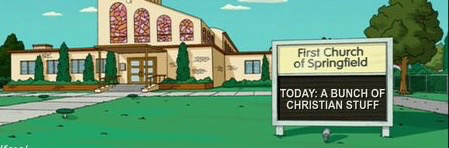
While there are certainly many ways to define success, if one views the format as just a bunch of Christian songs by a bunch of Christian singers with a bunch of Christian disc jockeys saying a bunch of Christian stuff they won’t have many listeners.

springfield-church

To be really successful a station must understand a bigger idea that transcends the nuts and bolts of most programming conversations.

People don’t listen primarily because of who you are; they listen because of who they are!

When you understand that, the rest is just details.*

(*There’s lots and lots and lots to the details, but I really needed a pithy ending!)

Tommy Kramer Tip #103 – Deepak Chopra on Surprises

If you get the Sundance channel, you probably know about the series “Iconoclasts”. I just saw an episode the other day featuring actor/comedian Mike Myers and the controversial Indian-born author and speaker Deepak Chopra. Myers was insightful and funny, but Chopra said something that really rang the bell of what makes great radio:
“If a life can be a series of perpetual surprises, that’s the most joyful experience you can have.”

That’s it. That’s the ‘secret’, if there is one. Most radio today is full of information, gossip, promotional messages, etc.—but lacks surprises. Being surprised by something is like seeing a butterfly emerge from its chrysalis when you’re a kid. Or an ending to a movie that you didn’t see coming. Or unexpectedly being moved by an act of kindness.

Shock is not the same thing as Surprise; it’s just one crayon. There are others. If you’re having trouble seeing them, well, that’s what I’m here for. Coaching isn’t about a set of “do this, don’t do that” rules. It’s about helping you access the things in your noggin that can surprise the listener.

– – – – – – –
Tommy Kramer
Talent Coach
214-632-3090 (iPhone)
e-mail: coachtommykramer@gmail.com
Member, Texas Radio Hall of Fame
© 2015 by Tommy Kramer. All rights reserved.

Leaders Must Lead

“A genuine leader is not a searcher for consensus but a molder of consensus.” – Martin Luther King, Jr.

images

“What am I doing wrong?  Why am I not communicating well?”

I’m in a meeting talking about a group of people who are having a hard time coming to a decision.  One of my best people and I are debating back and forth about whether we should let the group come to their own conclusion, or just tell them what’s happening.  I feel like I’m speaking in German while he’s talking French.  We have to reach a conclusion about this issue, and he’s framing it as a choice between telling them what to do or letting them make their own choice.

If you’re a boss, supervisor, manager or leader, you’ve probably been in a similar position.  You try to get your message across, but you’re just not communicating.  It’s one of the biggest frustrations we can have.

Suddenly, with a blinding flash of the obvious, I realized the problem.  We’re debating about an either/or choice, when there’s another option.  Being an expressive person who occasionally has no safety valve between brain and mouth, I blurted out, “Leaders gotta lead.”

This is one of the most difficult principles of leadership. You’re there, not to boss people around and tell them what to do, but to lead.  That means making the hard decisions, and yes, even pissing people off occasionally.

I guess the real skill is in knowing when to make the tough decision and when to keep quiet.  I’m not sure I’ve mastered that skill.

A leader realizes  there are always other options, and it’s rarely an either/or option.   Being a leader means focusing on doing the right thing rather than doing things right.  Either/or is a case of trying to do things right, and that my not be the issue at all.

Leaders must lead.

Frost Advisory #257 – The Top 10 Reasons Stations Aren’t Successful: The Final Countdown

For the last several weeks I’ve been digging into the most common challenges radio stations face in becoming successful. Now it’s time to count down the final four. Drum roll, please.

#4 – Inside thinking

We go to a restaurant. We instantly see what needs to be changed. The people at the restaurant can’t see it at all.

We check into a hotel. We instantly see that the very doors to enter the lobby are too cumbersome for anyone with luggage! Well, who in the world would bring luggage to a hotel?

When my daughter Carly was younger we would be out together and someone would inevitably say, “You look so much alike.” What a stranger could see instantly we struggled to see at all.

So it is for your radio station.

fresh-air

There are important things about your station you’ll be the last to see because you’re simply too close to it.

The importance of perceptual research or trusted outside counsel cannot be overstated. If you have neither, consider this idea.

Last week I was with my new friend David Salyers, head marketing guy at Chick-fil-A, and regular contributor to Keep The Faith. While showing us around The Hatch (the entire building devoted to hatching new ideas) he shared numerous remarkable concepts that drive their success!

The Hatch includes a mock up restaurant where they attempt to address “Points of Pain”; where the customer must overcome an inconvenience or an irritant to have a satisfying experience. What a great idea, I thought!

What are your station’s “Points of Pain”?

Is it the unfamiliar music you play that keeps your listener from hearing their favorites? (Everyone’s favorite radio station is the station that plays their favorite music).

Is it endless deejay banter that interrupts and interferes with their enjoyment of the music?

If you’re lacking an objective outside perspective on your station, consider asking your listeners.

After all, the only place to read the label is from outside the bottle.


Tommy Kramer Tip #102 – The Apple Philosophy and How it Applies to Radio

If you’re an Apple hater—you don’t like Mac computers, don’t like the iPhone, and would never buy an iPad—try to put that aside for a second. Of course, if you’re using a PC, you’re probably not reading this anyway, because you’re sitting through a Norton Security scan, Windows Updates that’ll take 40 minutes, or the dreaded blue screen of death. Anyway…

Apple has a simple philosophy. Three thoughts:
What would be cool?
What would be fun?
And what would benefit the customer’s life?

If your radio station thinks the same way—what would be cool, what would be fun, and what would benefit the listener’s life—you’ll be successful. But many stations seem to only think “What would be cool—to us? What would be fun—for us? And what would benefit us?”

As an air talent, even if your station doesn’t get it, YOU CAN. Start by being really, really user-friendly, like an iPad. (If I need some sort of prior knowledge to listen to your show, I’m out of here.) And like the guys in the Apple Stores, never talk down to your listener, or make him or her feel dumb for not knowing what you know. Make it FUN to listen. If you’re in a Talk or News format, make it always interesting and unique to hear your Content.

Now take these concepts and DO run with scissors!

– – – – – – –
Tommy Kramer
Talent Coach
214-632-3090 (iPhone)
e-mail: coachtommykramer@gmail.com
Member, Texas Radio Hall of Fame
© 2015 by Tommy Kramer. All rights reserved.